Team Schmear & Co.
SalusVPN
Chrome extension that lets users verify VPN infrastructure on-chain before connecting using a Pay-per-use system via USDC on Solana
Video Demo
About this project
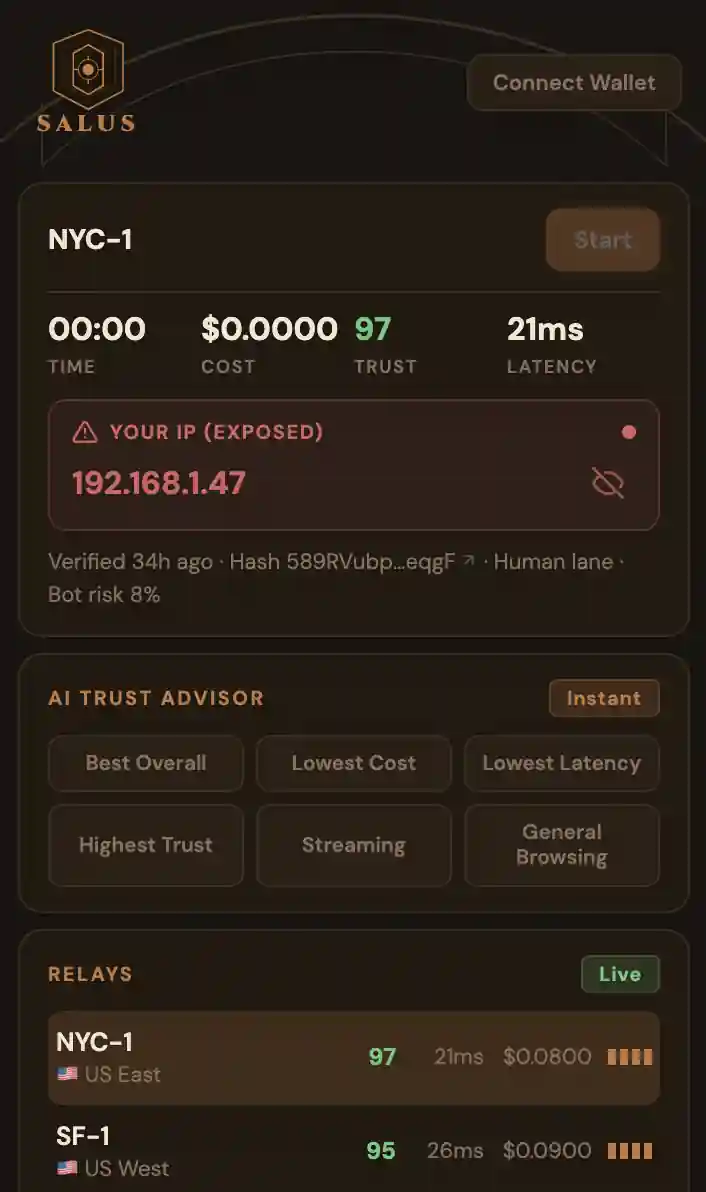
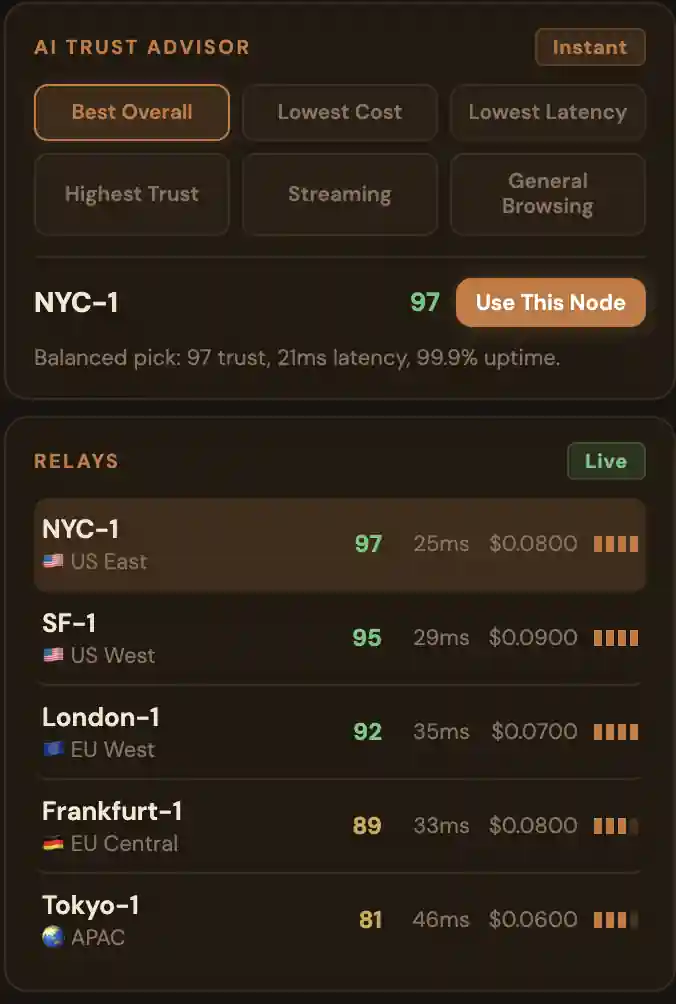
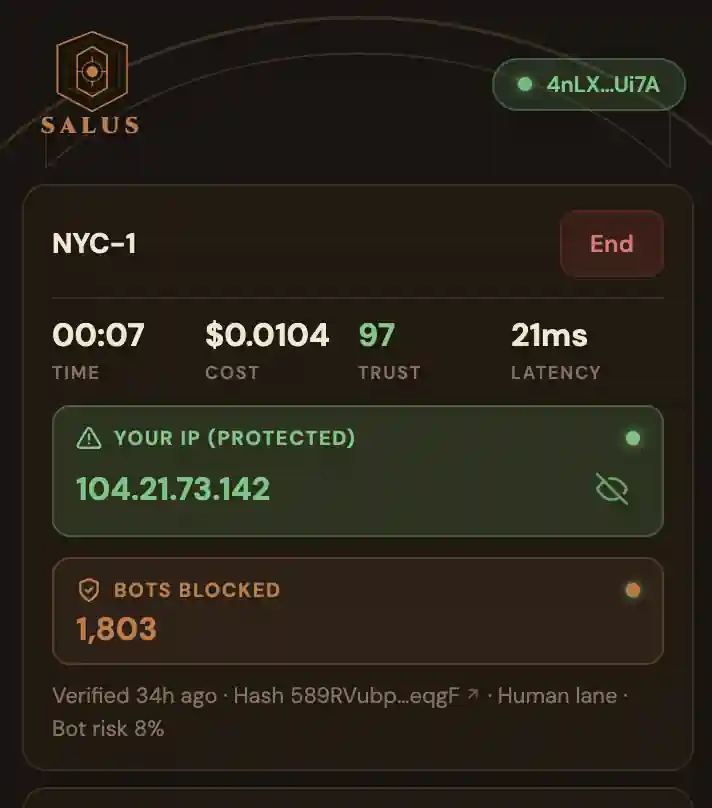
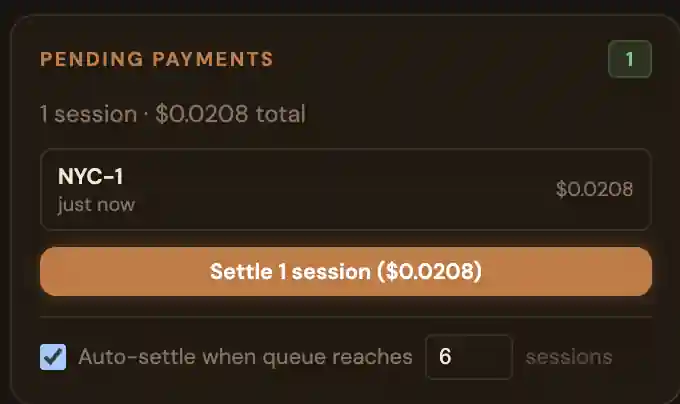
SalusVPN is a verifiable VPN trust layer that helps users choose trusted internet infrastructure before connecting. Instead of blindly trusting a VPN provider's privacy claims, users browse a relay marketplace of independently operated nodes with transparent metrics—latency, per-minute pricing, trust scores, verification recency, and human-lane availability. Every node links to a real Solana devnet attestation hash that opens on Solana Explorer, making "verified infrastructure" a checkable claim. The Next.js dashboard and Chrome extension work together as the primary experience. Users connect Phantom, MetaMask, or Solflare, get AI node recommendations from Google Gemini (Best Overall, Lowest Cost, Lowest Latency, Highest Trust, Streaming, General Browsing), and start wallet-signed sessions on their chosen relay. A floating HUD tracks live time, accrued cost, and latency; stopping a session queues payment instead of opening the wallet every time. Payments use Circle devnet USDC on Solana. Unpaid sessions accumulate in a pending queue and settle in one bundled SPL transfer—the backend sums each session's accrued cost, builds a single transaction, the user signs once, and every session in the batch is marked settled with the same on-chain signature. Preflight checks guide users to devnet SOL and USDC faucets. Built with Next.js 15, React 19, Gemini 2.0 Flash, and a Manifest V3 Chrome extension. Session routing is simulated for the hackathon prototype; trust verification, wallet auth, cost accrual, and batch settlement are functional end-to-end on Solana devnet.
Gallery