Team Duke of Dukingham
Agent Studio
Cursor of music editing
Video Demo
About this project
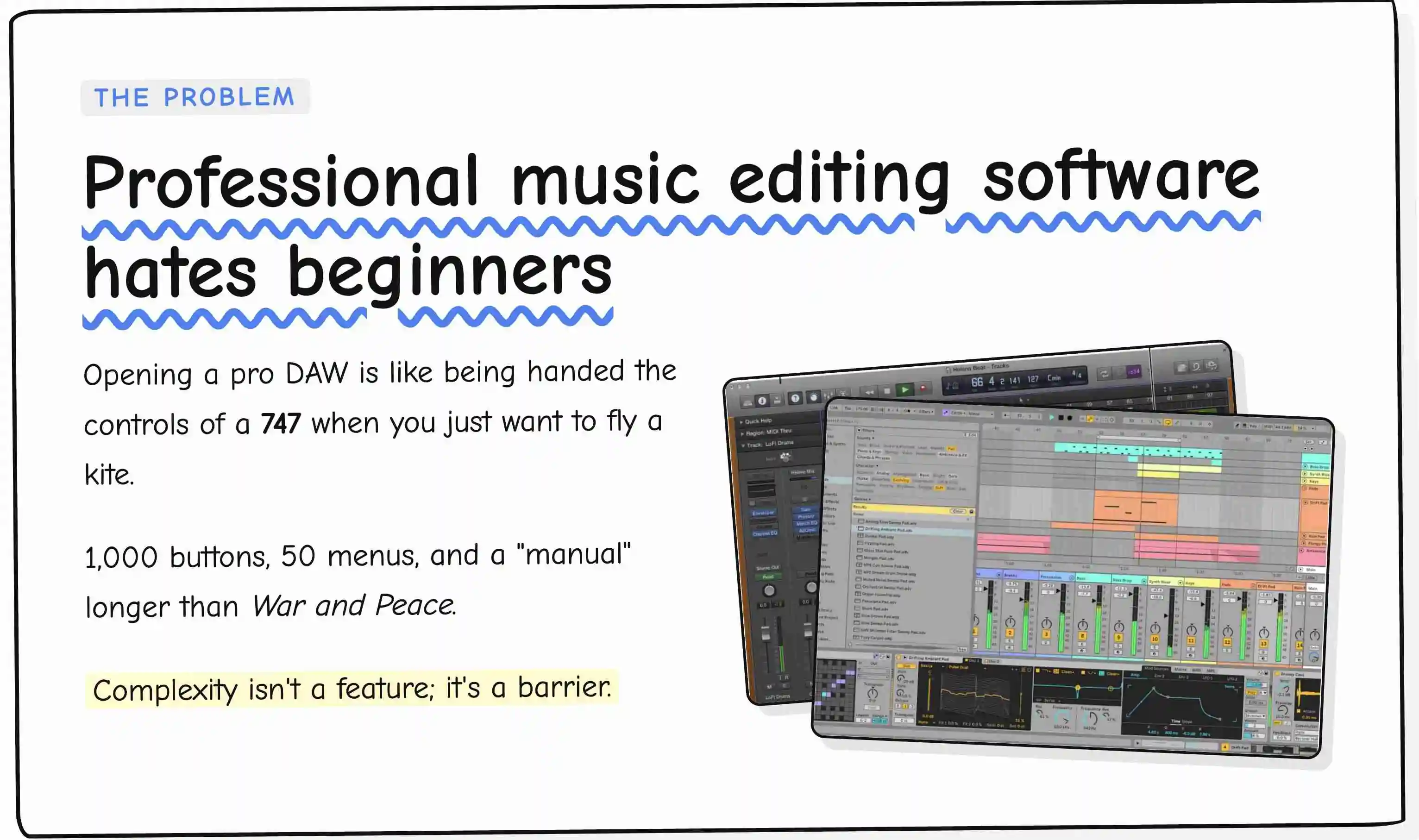
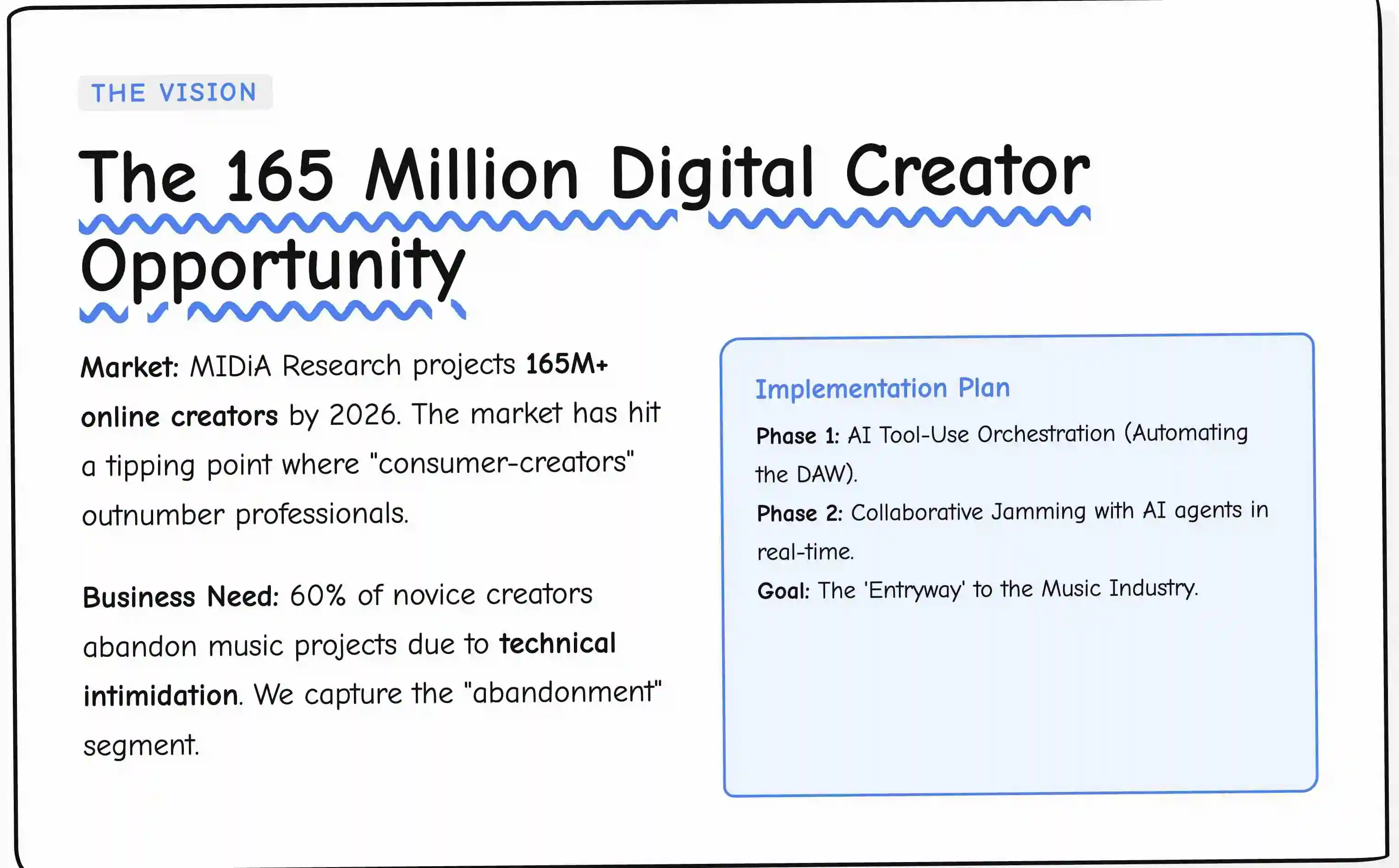
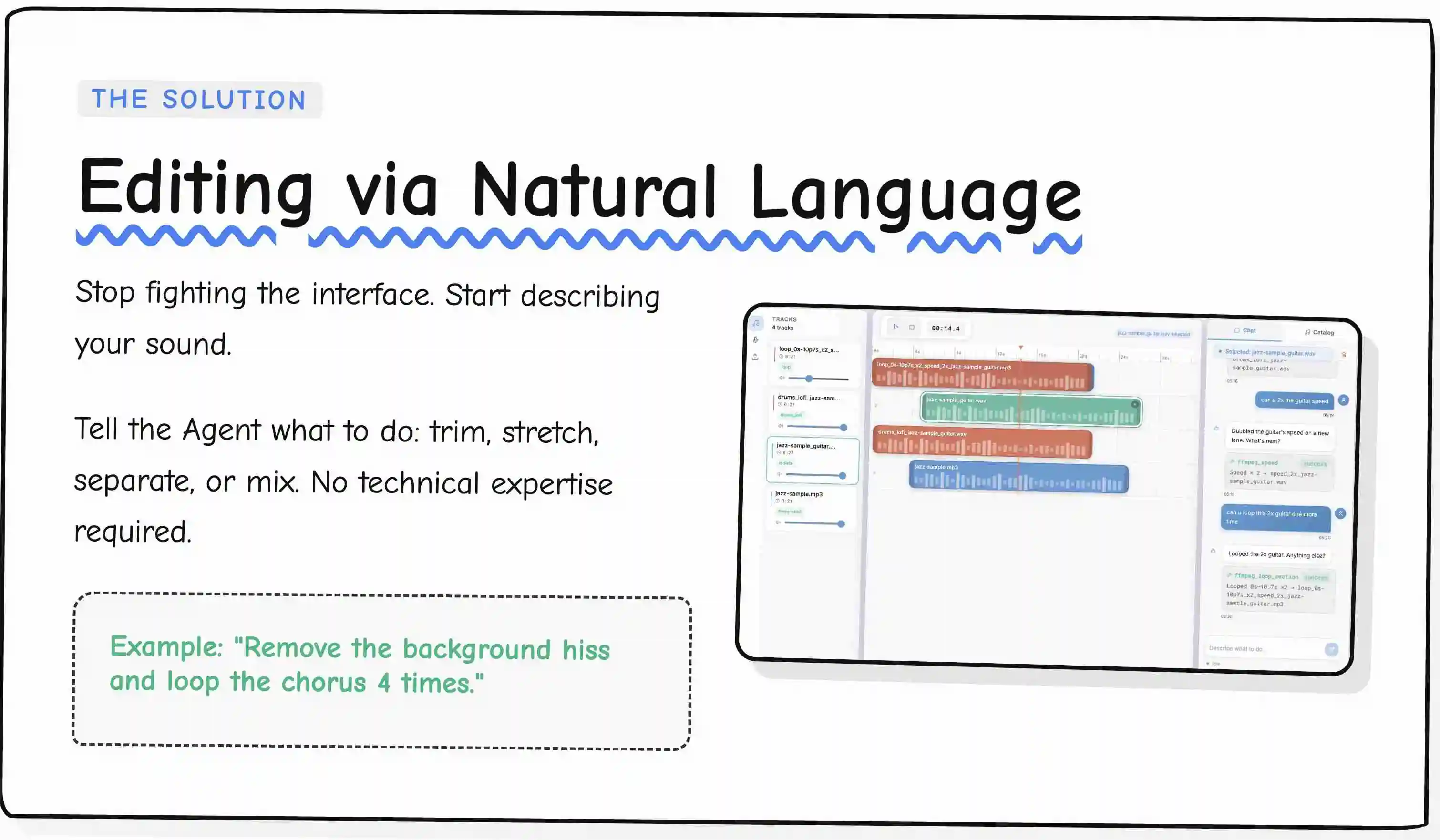
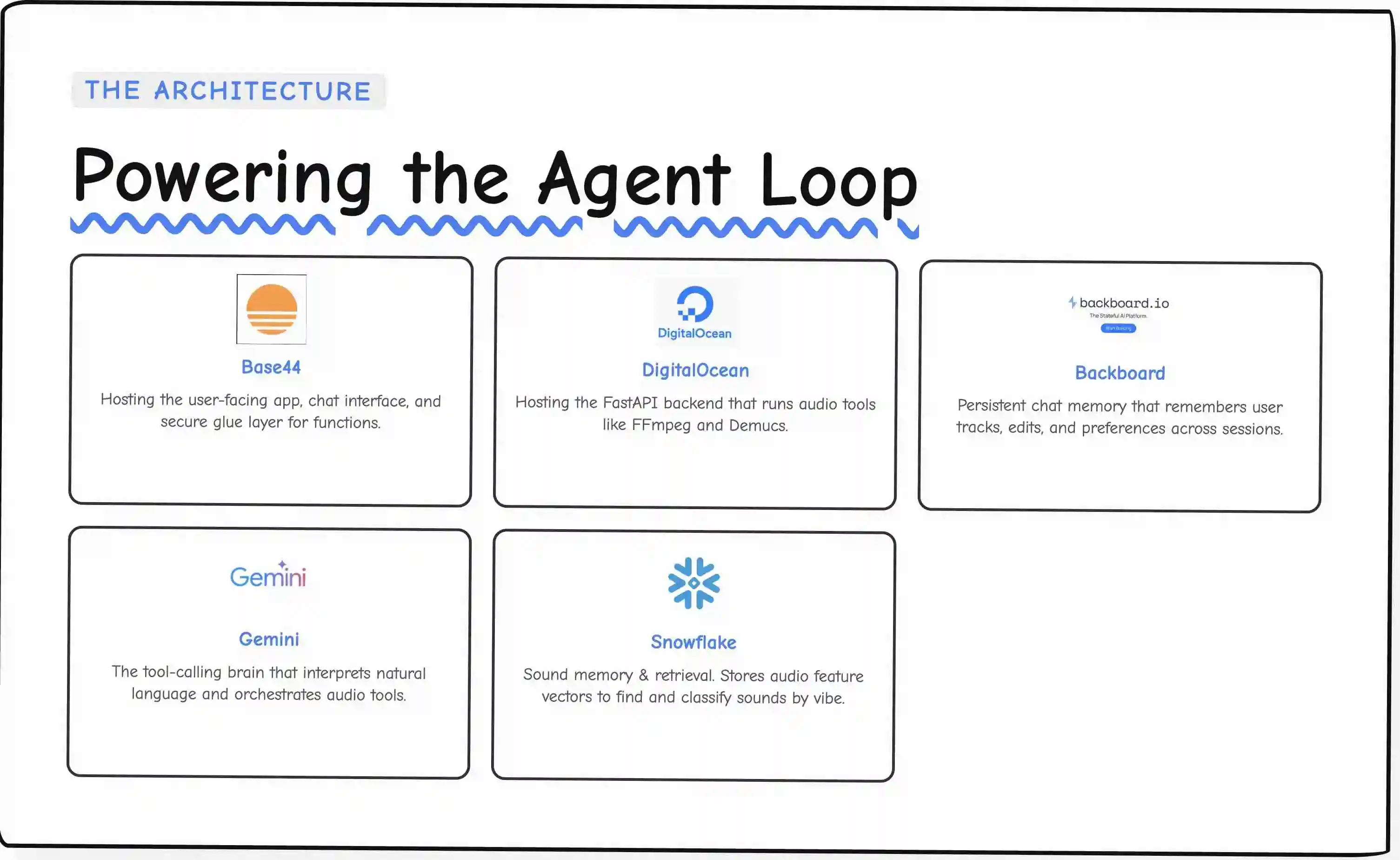
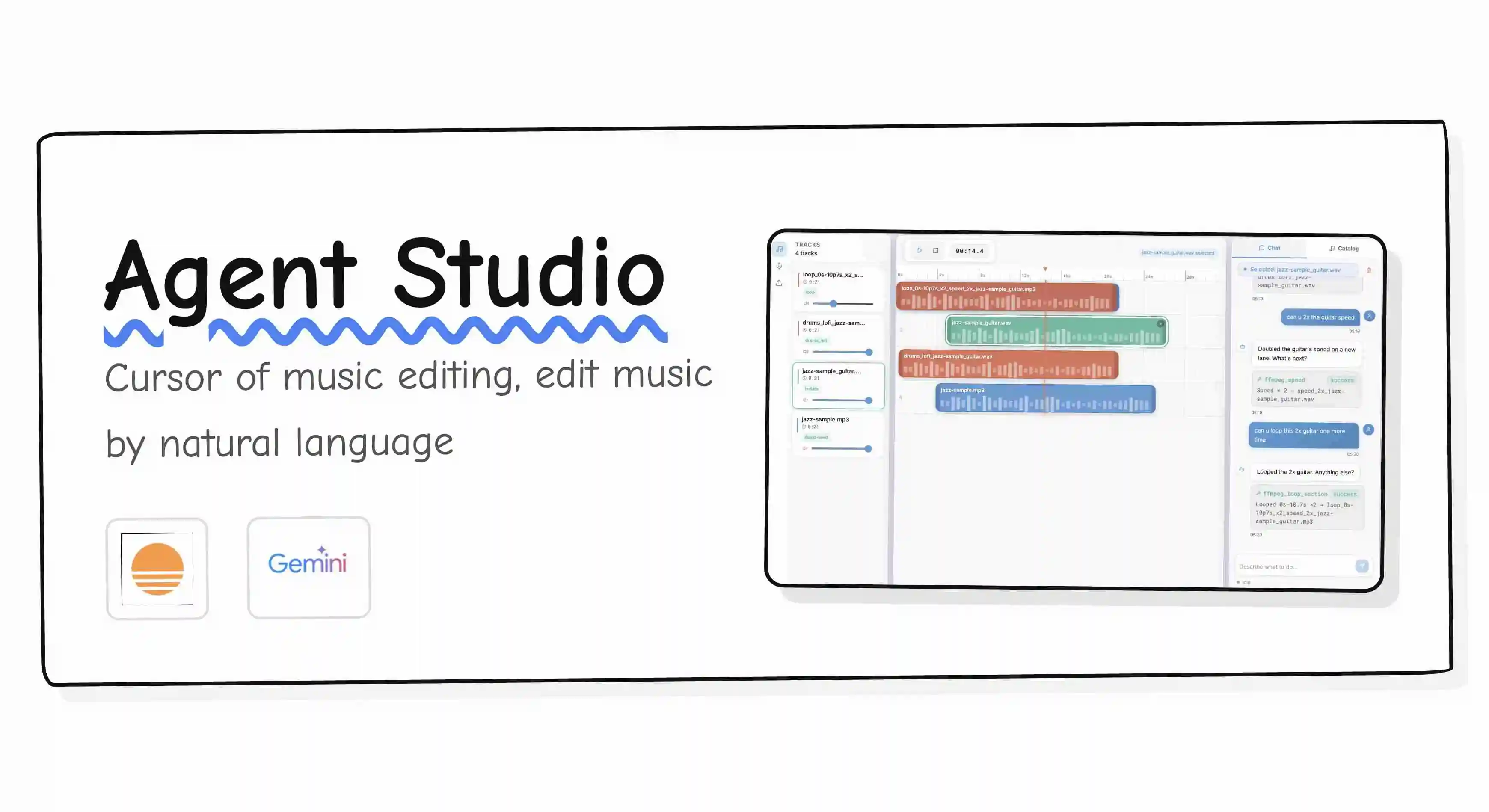
Professional music editing software is too complicated to use. For a small digital creator there is huge barrier to entry. Agent Studio solves this problem by giving state of the art LLMs ability to call these tools. This lets you describe what u want to the AI and it can push the buttons and turn the knobs for you. I wanted to lower the barrier for people to access music production. AI enhances everyone’s abilities, but in the creative industry, tech hasn’t given as much attention to accessibility. My goal is to make it easier for others to express themselves and take the first step toward facilitating music production for everyone, not just those with years of technical training. Stack: Next.js + TypeScript + Vercel AI SDK / FastAPI + Python + librosa + FFmpeg + Demucs + Whisper+ Base44 Hackathon tracks One project, five sponsors, each with a distinct and non-overlapping role. Base44 — overall track (front end) Base44's no-code builder generates the user-facing app — the chat interface, track list, and audio players. Gemini — tool-calling brain Google's Gemini is the LLM that interprets natural-language requests and decides which audio tools to run with which arguments Backboard — persistent memory Backboard provides chat memory that survives across sessions — it remembers the user's tracks, prior edits, and preferences ("make it like last time"). DigitalOcean — audio backend host What: DigitalOcean hosts the FastAPI backend that runs the real audio tools — FFmpeg transforms, Demucs stem separation, and librosa analysis. Snowflake — sound memory & retrieval What: Snowflake stores each track/chop's audio feature vectors (MFCC, chroma, RMS, onsets — already computed in audio_analysis.py) plus metadata, and retrieves or classifies sounds by how they actually sound.
Gallery